
Temperature sensitive products require more than a strong outer carton. During transportation and storage, exposure to heat, cold, humidity, and changing environmental conditions can affect product quality and increase the risk of damage. For wholesalers, distributors, manufacturers, and logistics companies, selecting suitable insulation materials is therefore an important part of packaging planning.
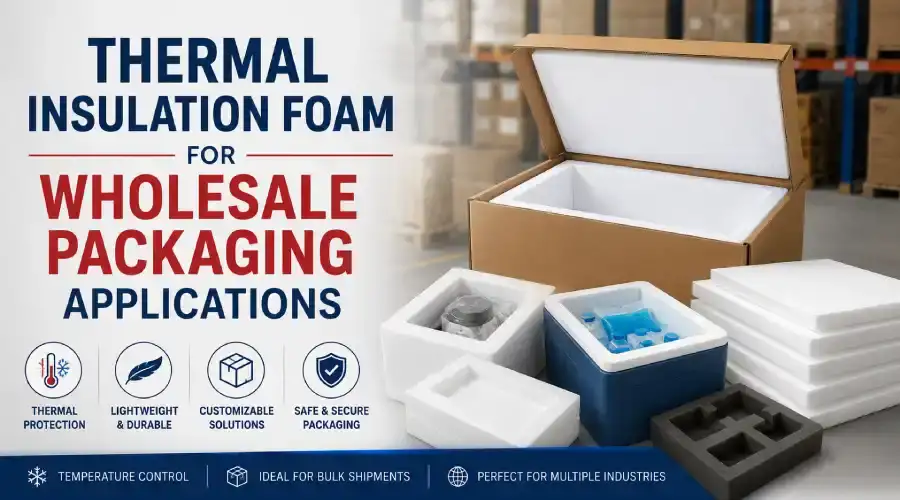
Thermal insulation foam provides a practical solution for reducing heat transfer and improving the protective performance of packaging. Its lightweight structure, customizable dimensions, and insulation properties make it suitable for many commercial packaging applications, including food transportation, pharmaceutical shipments, cold chain logistics, e commerce fulfillment, and industrial product protection.
For B2B buyers, however, purchasing thermal insulation foam is not simply about selecting a material with good insulation performance. Factors such as foam density, thickness, moisture resistance, durability, customization, production capacity, quality consistency, and supplier reliability can directly affect the success of a packaging program.
Thermal insulation foam is a lightweight material designed to slow the transfer of heat between the inside and outside of a package or protected product. Its cellular structure can create a layer of resistance against temperature changes, helping packaging maintain more stable internal conditions during transportation and storage. Depending on the material and application, thermal insulation foam can be manufactured in different densities, thicknesses, shapes, and sizes. It may be supplied as sheets, liners, inserts, panels, protective components, or custom shaped packaging parts.
For wholesalers, thermal insulation foam can provide an effective combination of thermal protection, lightweight construction, customization, and packaging versatility. The right solution depends on your product, packaging format, temperature requirements, transportation conditions, and order volume. Working directly with an experienced manufacturer can help you select suitable materials and develop insulation components that match your commercial requirements.
Request a Free Quote TodayThe performance of an insulation foam depends on several characteristics. Thermal conductivity is particularly important because it indicates how readily heat passes through the material. Density, thickness, cell structure, moisture resistance, and physical strength can also influence overall packaging performance.
For B2B applications, the ideal foam is not necessarily the thickest or most expensive option. Buyers should select a material based on the temperature requirements, packaging design, product sensitivity, transportation conditions, and expected duration of protection.
Wholesale packaging often involves long supply chains. Products may move from a manufacturer to a distribution center, then to a wholesaler, retailer, or final customer. During this process, packages can experience different outdoor temperatures, warehouse conditions, loading environments, and transportation times.
Thermal insulation foam can help reduce the speed at which external temperature changes reach the packaged product. This makes it useful when businesses need to create a more controlled internal environment without relying entirely on refrigerated transportation.
Another advantage is its lightweight construction. Packaging companies need to balance protection with transportation efficiency. Heavy packaging can increase shipping costs and make handling more difficult, particularly when products are shipped in large quantities. Foam insulation can provide thermal protection without adding excessive weight to the overall package.
Foam can also contribute to physical protection. Depending on the material selected, it may absorb impacts, reduce movement inside the package, and protect products from vibration or compression. This allows businesses to combine thermal and physical protection within the same packaging design.
For wholesale operations, consistency is equally important. Commercial buyers may require thousands or even millions of packaging components with consistent dimensions and specifications. A reliable thermal insulation foam supplier can provide standardized production and customized formats that fit the buyer's packaging system.
Thermal insulation foam is used across industries where products can be affected by temperature fluctuations. Its applications range from everyday consumer products to highly sensitive commercial goods:
Food distribution is one of the most common applications for insulated packaging. Fresh foods, frozen products, dairy items, chocolates, seafood, prepared meals, and other temperature sensitive goods can require protection during transportation.
For wholesalers and food distributors, thermal insulation foam can be integrated into shipping containers, insulated boxes, liners, and custom inserts. The insulation layer helps slow external heat transfer while the rest of the packaging system provides structural protection.
The material selected should match the product's temperature requirements and expected shipping duration. Businesses should also consider moisture exposure, especially when products are packed with ice packs or other cooling systems.
Pharmaceutical and healthcare products can have strict temperature handling requirements. Medicines, laboratory materials, medical products, and other temperature sensitive items may need additional insulation during transportation. Thermal insulation foam can be incorporated into packaging systems designed for controlled temperature shipments. The foam does not replace the need for appropriate cooling technology or validated packaging systems, but it can form an important part of the overall thermal protection structure. For commercial buyers in this sector, material consistency, documentation, applicable certifications, and manufacturing quality are especially important.
The growth of e commerce has increased demand for packaging that can protect products during individual shipments. Businesses selling temperature sensitive foods, cosmetics, specialty products, and other goods need packaging that can withstand different transportation conditions. Thermal insulation foam can be designed around the dimensions of shipping cartons and containers. Custom liners and inserts can help reduce empty space while providing a protective insulation layer. For high volume e commerce operations, lightweight materials are particularly valuable because thousands of packages may be shipped every day.
Industrial products can also require protection from temperature changes. Electronics, specialty chemicals, components, adhesives, laboratory products, and other materials may have storage or transportation conditions that need to be controlled. Thermal insulation foam can be manufactured according to the dimensions and protection requirements of the product. Custom inserts can help hold products securely while insulation panels or liners provide additional resistance to external temperature changes.
Cold chain logistics requires coordinated temperature management from production through final delivery. Insulated packaging can support this process by reducing the rate of temperature change inside a package. For wholesalers and distributors, this can be especially important when products move between refrigerated facilities and standard transportation environments. The performance of the entire packaging system depends on factors such as insulation material, thickness, cooling source, package size, ambient conditions, and transit duration.
Different foam materials offer different combinations of thermal performance, flexibility, strength, moisture resistance, and cost. The appropriate choice depends on the application rather than simply selecting the material with the highest insulation rating. Expanded polystyrene foam is widely associated with lightweight insulated packaging. It can provide useful thermal resistance while maintaining a relatively low weight. It is commonly used in containers and packaging applications where thermal protection and affordability are important.
Polyethylene foam offers flexibility and can provide cushioning as well as insulation. Its resistance to moisture can make it useful for applications where packaging may be exposed to condensation or other sources of moisture. Polyurethane foam can provide strong thermal insulation performance and is used in applications where higher levels of insulation are required. Its characteristics can vary depending on formulation and manufacturing method.
There is also growing interest in more sustainable foam and insulation solutions. B2B customers increasingly evaluate packaging materials based not only on performance and cost but also on environmental considerations. Buyers should discuss available recyclable, recycled content, or other environmentally preferable options with their supplier based on the intended application.
When sourcing thermal insulation foam for wholesale packaging, procurement teams should evaluate the complete application rather than focusing on one specification.
Thermal performance: should be one of the first considerations. Buyers need to understand the expected temperature range, shipping duration, ambient conditions, and required level of protection. These factors help determine the appropriate material and thickness.
Foam density and thickness: also influence performance. A thicker material may provide greater resistance to heat transfer, but increasing thickness can affect package dimensions, storage space, material costs, and transportation efficiency. The goal should be to achieve the required performance without unnecessary material use.
Moisture resistance: is important for refrigerated and cold chain applications. Condensation and cooling systems can expose packaging materials to moisture, so the foam should be appropriate for the expected environment.
Physical strength: should also be evaluated. Packaging can experience stacking pressure, vibration, impacts, and repeated handling during transportation. If the insulation material also needs to provide cushioning, compression resistance and flexibility become important selection criteria.
Customization: is another major consideration for B2B buyers. Packaging rarely follows one universal size. Custom foam sheets, liners, inserts, panels, and die cut components can improve the fit between insulation and the packaging structure.
Before placing a large order, procurement teams should review:
• Material type and specifications
• Required thickness and density
• Thermal performance requirements
• Product dimensions
• Moisture and environmental exposure
• Expected order volume
• Customization requirements
• Quality control procedures
• Packaging and shipping requirements
• Applicable certifications and compliance documentation
Standard insulation products can work well for general applications, but many commercial buyers require customized solutions. A custom thermal insulation foam component can be manufactured according to the dimensions and configuration of a specific packaging system. Customization may include different thicknesses, sheet sizes, shapes, die cut designs, inserts, liners, and protective components. Businesses can also discuss material selection based on the temperature sensitivity and physical characteristics of the products being shipped.
For wholesalers and distributors, customization can create additional opportunities to develop packaging solutions for specific customers or industries. Instead of stocking one generic insulation format, businesses can work with a manufacturer to develop components that fit their product range. OEM and private label requirements may also be relevant for packaging companies and distributors selling insulation products under their own brand. In these cases, production consistency and communication between the buyer and manufacturer become particularly important.
The best insulation material depends on the application, packaging design, product requirements, and commercial priorities. The following comparison highlights common factors that B2B buyers may consider:
|
Factor |
Thermal Insulation Foam |
Traditional Insulation Materials |
|
Weight |
Generally lightweight |
Varies by material |
|
Customization |
High potential for custom shapes and sizes |
Depends on material |
|
Thermal protection |
Available in multiple performance levels |
Varies considerably |
|
Moisture resistance |
Depends on foam type |
Depends on material |
|
Cushioning |
Many foam types can provide cushioning |
Depends on material |
|
Packaging integration |
Suitable for liners, inserts, sheets, and panels |
Application dependent |
|
Bulk production |
Suitable for high volume requirements |
Depends on manufacturing process |
|
Sustainability options |
Eco friendly options may be available |
Depends on material and composition |
This comparison should be used as a starting point rather than a universal ranking. Buyers should evaluate actual material specifications and application requirements before selecting an insulation solution.
Bulk sourcing can provide several advantages for commercial buyers. Large volume orders can help businesses maintain consistent material specifications across multiple packaging lines while simplifying procurement.
For wholesalers and distributors, predictable supply is particularly important. Packaging shortages can interrupt fulfillment operations and create delays for downstream customers. Establishing a reliable supply relationship can help businesses plan inventory more effectively.
Bulk purchasing may also provide opportunities for customized production. Instead of purchasing standard products from multiple sources, buyers can work with one experienced manufacturer to develop specifications suitable for their packaging requirements.
However, buyers should not evaluate bulk pricing alone. A lower unit price does not necessarily represent better value if the material has inconsistent quality, poor dimensional accuracy, inadequate packaging, or unreliable delivery performance.
Choosing the right supplier is an important step for businesses planning long term packaging programs. Commercial buyers should look beyond product availability and evaluate the manufacturer's production capabilities.
An experienced supplier should be able to clearly explain material specifications, customization possibilities, quality control procedures, production capacity, and packaging options. Sample production can also help buyers evaluate whether the proposed material meets their requirements before committing to a large order.
For international buyers, export experience can be another important consideration. Proper packaging, documentation, communication, and production scheduling can make a significant difference when orders move across international supply chains.
Businesses should also consider whether the supplier can scale production as demand increases. A supplier that can support both initial orders and larger future volumes can become a more valuable long-term partner.
Experience matters when developing insulation materials for commercial packaging applications. Manufacturers with extensive industry knowledge are better positioned to understand how material structure, processing, thickness, and application requirements influence product performance.
With more than 50 years of experience transforming plastic into eco friendly foam and insulation products, an experienced family owned manufacturer can provide valuable knowledge across packaging and thermal applications.
For B2B customers, this experience can support more than standard product supply. Buyers may need assistance with material selection, custom dimensions, packaging design requirements, production quantities, and application specific specifications.
A strong manufacturing partner should focus on consistent production, responsive communication, customization capabilities, and reliable supply rather than treating every order as a standard transaction.
Thermal insulation foam is used to reduce heat transfer and provide additional temperature protection for packaged products. It can be used in food, pharmaceutical, cold chain, e commerce, and industrial packaging.
Yes, suitable foam materials can be incorporated into cold chain packaging systems. However, overall performance depends on the foam, package design, cooling system, ambient temperature, and transportation duration.
Yes. Depending on the manufacturer, foam can be produced in customized thicknesses, dimensions, shapes, liners, inserts, and other packaging formats.
Common applications include food and beverage, pharmaceuticals, healthcare, e commerce, cold chain logistics, electronics, industrial manufacturing, and specialty product distribution.
Manufacturers can supply thermal insulation foam for wholesale and high-volume packaging requirements. Buyers should discuss minimum order quantities, specifications, customization, production capacity, and delivery schedules before placing an order.
More blogs Like this
How to Choose the Right Thermal Insulation Material for Your Industry
Common Types of Thermal Insulation Used in Industrial Applications
Temperature sensitive products require more than a strong outer carton...
READ FULLHeat naturally transfers through walls, pipes, machinery, storage tank...
READ FULLHeat is an important form of energy. For industry, wasted heat equals ...
READ FULL